


EatClub (Box8): How Two IIT Grads Turned Campus Food into a Cloud Kitchen Playbook

Updated: Mar 17
If you’ve ever lived alone in a new city, you don’t need research reports to understand this problem. You’ve lived it.
It’s 9:45 PM. You’re back from work or classes, exhausted in that quiet way where even chopping vegetables feels like too much effort. Cooking isn’t happening. Eating out feels expensive. So you open a food delivery app.
And the daily dilemma begins.
Do you order the butter chicken again — the one that tastes amazing but leaves you heavy the next morning? The biryani that hits perfectly today but makes you promise yourself you’ll “eat clean” tomorrow? The cheap Chinese combo that fills you up but doesn’t feel like something you should be eating four nights a week?

In cities like Mumbai, Bangalore, and Pune, thousands of students and young professionals were living away from home for the first time. No mother’s dal. No simple roti-sabzi. No comfort meals waiting at the table. Just long days and the responsibility of figuring out food on your own.
And yes, technically, you had options.
There were the local takeaway joints — cheap, fast, aggressively flavorful. The kind of food that was designed for instant satisfaction. Extremely spicy. Extremely oily. Built for taste, not sustainability. You could eat it once. Maybe twice. But every day? Your stomach would protest long before your wallet did.
Then there were the fancier outlets. Sushi bowls. Loaded pizzas. Continental platters. Clean packaging. Better branding. Instagram-friendly. Wallet-unfriendly. Great for weekends. Terrible for everyday survival.
And if you were trying to be responsible, you probably signed up for a tiffin service at some point.
You’d wait for that steel dabba each evening, slightly hopeful. Open it slowly. And there it was — the familiar rotation. Monday rajma. Tuesday aloo gobi. Wednesday chole. Repeat. Again. And again. And again.
The food wasn’t bad.
It was just predictable. Mechanical. Lifeless.
Eating stopped being something you enjoyed. It became something you endured. You weren’t choosing food — you were managing it.

That was the reality for a generation of urban bachelors.
Food delivery existed. Tiffin services existed. Restaurants existed.
But nothing was built specifically for the rhythm of everyday, modern, urban living.
Delivery was indulgent. Tiffin was repetitive. Dining out was expensive.
No brand had stepped in and asked the obvious but uncomfortable question:
What does someone living away from home actually need five days a week?
Not celebration food. Not cheat-meal food. Not lifeless subscription food.
Just reliable, balanced, slightly exciting meals that don’t feel like a compromise.
The gap wasn’t dramatic. It wasn’t trending. It wasn’t headline-worthy.
But it was deeply human.
And the smartest businesses don’t always chase noise.
They notice the quiet frustrations that repeat every single night.
That quiet frustration is where Box8’s story truly begins.
Section 2: How Box8 Came Into the Picture — And Why It Didn’t Start as a Cloud Kitchen
Box8 didn’t begin with a grand vision to fix India’s food delivery problem.
It began the way many college startups do — with curiosity, hunger, and just enough confidence to try something.

In 2011, two IIT Bombay students, Amit Raj and Anshul Gupta, started a small food venture inside their campus. It wasn’t called a “cloud kitchen.” That term didn’t even exist in India at the time. It was simply good, fast food made for people who didn’t want to walk too far.
They started by selling wraps and quick meals to fellow students. Simple. Affordable. Convenient.
And it worked.
Students responded. Orders increased. Word spread. There’s something powerful about early validation — it convinces you that maybe this isn’t just a side hustle.
Maybe this can be bigger.
After graduation, they decided to take it seriously. They expanded outside campus. Opened physical outlets. Built proper kitchens. Designed a brand. Hired staff.
Because at that time, if you wanted to build a serious food business in India, you built restaurants.
That was the default model.
Visibility meant location. Credibility meant storefront. Growth meant more outlets.
And for a while, that seemed logical.
But the food business has a way of teaching you very quickly where the real costs hide.
Rent doesn’t care if sales dip. Inventory doesn’t pause if demand fluctuates. Staff salaries don’t adjust automatically.
Physical restaurants came with heavy fixed costs — and those costs don’t forgive mistakes.
At the same time, something interesting was happening quietly.
More and more orders were coming from delivery.
Not dine-in.
Not walk-ins.
Delivery.
Customers weren’t choosing Box8 because of ambience. They were choosing it because it reached them.
The founders began noticing something subtle but powerful:
People didn’t need a place to sit.
They needed reliable food that arrived on time.
That shift in realization didn’t happen overnight. It came from observing patterns. From watching where revenue was actually coming from. From understanding that the future might not belong to restaurants with chairs — but to kitchens built purely for delivery.
Box8 didn’t start as a cloud kitchen pioneer.
It became one because the market quietly pushed it there.
And that pivot would define everything that followed.
Section 3: The Founders — IIT Graduates, But More Importantly, Systems Thinkers
Box8 was founded by Amit Raj and Anshul Gupta, both alumni of IIT Bombay. At first glance, that detail seems predictable — another startup, another IIT story.
But the interesting part isn’t the IIT tag.
It’s what they did with it.

Amit Raj, who would go on to become the CEO, wasn’t a chef or a hospitality veteran. His training was technical. Structured. Analytical. He approached problems the way engineers do — by breaking them down into components and figuring out where friction exists. That mindset would later shape how Box8 thought about kitchen density, delivery radius, and menu standardization.
Anshul Gupta, who played a critical role in operations and growth (and later held leadership responsibilities including co-founder and executive roles), brought a complementary lens. While Amit leaned toward systems and optimization, Anshul focused heavily on execution and expansion — what it takes to scale something beyond an idea. In food, ideas are cheap. Execution is everything.
Neither of them came from restaurant families. Neither had years of experience running kitchens. In fact, that lack of legacy baggage may have helped more than hurt.
They didn’t grow up believing that a successful food brand must have:
Prime high-street real estate
Elaborate dining areas
A massive menu
They entered the industry without emotional attachment to its old rules.
At the same time, being outsiders meant they underestimated certain realities early on — fixed costs, perishability, operational unpredictability. They learned those lessons in real time.
And that’s important for aspiring founders to understand.
Your degree doesn’t run your business.
Your adaptability does.

Amit and Anshul’s IIT background didn’t magically make Box8 successful. What it did provide was a comfort with data, experimentation, and iteration. When delivery numbers started overtaking dine-in numbers, they didn’t ignore it out of ego. They studied it. When expansion began stressing margins, they didn’t double down blindly. They reconsidered the structure.
Today, Amit Raj continues to serve as CEO, steering the company through its cloud-kitchen evolution and competitive landscape. Leadership in food is not about glamour — it’s about surviving thin margins and constant operational pressure. That requires long-term discipline more than flashy innovation.
The founders didn’t enter food because they were experts.
They became experts because they stayed long enough to learn.
And that persistence — not pedigree — is what laid the foundation for Box8’s eventual transformation.
Section 4: The Pivot — When the Numbers Forced a Different Model
The shift at Box8 didn’t begin with a rebranding exercise or a strategic offsite. It began while they were simply running the business.
As more outlets opened, revenue did grow — but so did pressure. Each new store came with long lease commitments, upfront interior investments, equipment costs, and a full team on payroll. Expansion looked impressive from the outside, but inside, the founders could see how sensitive the model was to small fluctuations in demand.

A slow weekday didn’t just mean fewer orders. It meant fixed rent, fixed salaries, and inventory sitting in storage with a limited shelf life.
Around the same time, another pattern started becoming harder to ignore.
Delivery orders were rising consistently. Not occasionally. Not seasonally. In some locations, delivery was contributing the majority of revenue. Walk-ins weren’t disappearing, but they weren’t driving growth either.
That forced an uncomfortable question: if customers are increasingly ordering from home, why are we paying premium rent for dining space they’re not using?
This wasn’t an emotional realization. It was arithmetic.
When the team began breaking down outlet-level performance, they saw that high real estate costs were no longer aligned with how customers were behaving. Revenue was shifting toward delivery, but the cost structure was still built for dine-in.
At the same time, aggregators like Swiggy and Zomato were scaling rapidly. Ordering food had become frictionless. Customers no longer needed proximity; they needed reliability and speed.
But aggregator commissions — often between 20% and 30% — were not small. They directly ate into margins. That meant the rest of the model had to become tighter, leaner, and more predictable.

The founders started asking different questions.
Instead of “How do we expand outlets?” it became “How do we improve contribution per order?”
Instead of “What new dishes can we add?” it became “What items generate repeat behavior with stable margins?”
And slowly, the model began changing.
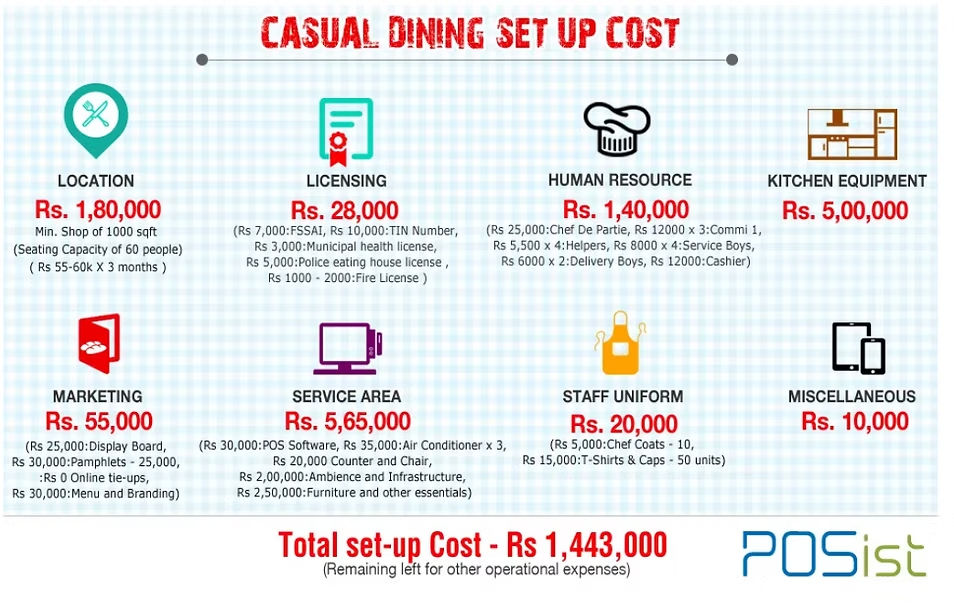
New kitchens were smaller and placed in lower-rent areas. They were not designed for customers to walk in. They were designed for orders to flow out. Seating areas disappeared. Decorative investments disappeared. The layout prioritized throughput — prep time, assembly speed, packaging efficiency.
Menu decisions became more disciplined. The team noticed that customers weren’t ordering experimental cuisine. They were ordering structured meals — rice, gravies, rotis, protein combinations. Food that felt familiar. Food that traveled well. Food that could be eaten multiple times a week without fatigue.
By narrowing the menu and standardizing components, Box8 reduced inventory complexity and improved predictability. Fewer SKUs meant lower wastage. Repeat ingredients improved procurement leverage. Kitchen training became easier. Operational variability reduced.
The business began to look less like a restaurant chain and more like a controlled production system.
There was no dramatic announcement that “we are now a cloud kitchen.” The term itself wasn’t mainstream in India yet.
But internally, the logic had shifted.
They stopped optimizing for footfall and started optimizing for delivery radius. They stopped measuring success by store visibility and started measuring it by repeat order density within specific pin codes.
That shift — driven not by trend but by economics — laid the foundation for what would later be recognized as a cloud kitchen model.
Box8 didn’t pivot because it wanted to be modern.
It pivoted because the numbers made the old structure unsustainable.
Section 5: Becoming “Desi Meals Delivered” — The Power of Narrowing the Menu
Once Box8 accepted that delivery was no longer secondary, another realization followed.
It wasn’t enough to change where they operated.
They had to change what they were selling.
In the early days, the menu was broader. Wraps, quick bites, experimental combinations — the usual approach of trying to attract everyone. But delivery data tells you something restaurants often ignore: customers don’t behave like diners when they’re ordering online.
Online, people repeat.
They don’t browse endlessly for novelty. They look for something familiar. Something filling. Something reliable.
When the team started analyzing repeat order patterns, a clear trend emerged. The highest-performing items weren’t the creative dishes. They were structured Indian meals — rice with gravy, roti combinations, protein-based curries. The kind of food that felt substantial.
More importantly, they traveled well.
That detail matters more than it seems.
Delivery exposes weak menus. Fragile dishes collapse in transit. Presentation disappears. Temperature drops. What remains is taste, portion size, and comfort.
Indian gravies, rice bowls, and roti-based meals survived the journey better than many other formats. They retained heat. They retained structure. They felt complete.
So Box8 made a disciplined choice.
Instead of expanding variety, they narrowed focus.
They engineered meal boxes.
Not random items.
Not à la carte chaos.
Curated combinations designed for repeat consumption.
This did three things at once.
It simplified kitchen operations. It improved ingredient predictability. It positioned the brand emotionally.
Box8 was no longer just a food delivery brand.
It became a dependable fallback.
And there’s something powerful about being the fallback.
When customers are unsure what to order, they choose what feels safe.
Not the trendiest option. Not the cheapest. Not the fanciest.
The one that won’t disappoint.
By leaning into “Desi Meals Delivered,” Box8 wasn’t trying to be cool.
It was trying to be consistent.
And in food delivery, consistency is what builds habit.
Habit builds frequency.
Frequency builds survival.
That’s when Box8 stopped being an experiment.
And started becoming a system.
Section 6: When the Market Got Crowded — Competing in the Age of Aggregators
Just when Box8 had stabilized its delivery-first model and tightened its operations, the market around it began transforming rapidly.
Swiggy was no longer just a new app. It was becoming infrastructure. Zomato was aggressively expanding delivery. Ordering food wasn’t an occasional decision anymore — it was habit-forming.
But here’s what changed.
Earlier, restaurants competed with other restaurants.
Now, they were competing inside the same digital shelf.
On a delivery app, Box8 wasn’t competing with the restaurant next door. It was competing with hundreds of options visible on the same screen — biryani brands, pizza chains, local dhabas, new cloud kitchens, discount-heavy virtual brands.
Discovery became algorithmic.
Visibility was no longer about location.
It was about ranking.
And ranking often came down to discounting.
This is where many food brands started bleeding.
Aggregator commissions were already high. Add to that platform promotions, discounts, and marketing spends, and suddenly growth came at the cost of margin erosion.
Box8 faced a strategic decision.
Play the discount game and chase top-of-page visibility.
Or build enough brand recall that customers search for you directly.
They chose the slower route.
Instead of constant price wars, they doubled down on positioning. “Desi Meals Delivered” wasn’t just a tagline anymore. It was a defensive strategy. The goal wasn’t to be the cheapest option in the app. It was to be the dependable one.
This mattered because as the cloud kitchen wave intensified, competitors like Rebel Foods (with multiple brands under one roof), FreshMenu, and others were expanding aggressively.
Rebel Foods optimized for portfolio strategy — multiple cuisines, multiple brands, single kitchen infrastructure. It was a scale play.
Box8 didn’t copy that model.
It leaned deeper into identity.
Rather than operating ten virtual cuisines, it focused on strengthening one clear category — everyday Indian meals.
That focus created operational clarity. Procurement became simpler. Training became easier. Quality control improved. Brand messaging stayed consistent.
At the same time, they expanded kitchen density carefully. Instead of racing across dozens of cities overnight, they built clusters. Dense pockets where delivery radius efficiency made sense.
This cluster strategy did something important.
It reduced delivery time variability.
It improved order predictability.
And it improved contribution margins at the unit level.
While the broader food-tech market was chasing scale headlines, Box8 was quietly refining unit economics.
This is the part most aspiring founders miss.
Growth in food is noisy.
Survival is quiet.
Box8 didn’t become the loudest brand in the ecosystem. It became one of the more disciplined ones.
And in a business where small inefficiencies compound daily, discipline is a competitive advantage.
The market around them got louder. More funded. More aggressive.
But Box8 survived by narrowing, not expanding recklessly.
And that’s what kept it relevant even as the delivery economy matured.
Section 7: The Funding Story — From Self-Funded Experiment to Backed Growth
Before there were venture capital headlines, there was risk.
In the early days, Box8 wasn’t running on institutional funding. It was running on founder belief and small capital pools. Like most early-stage food businesses, the first version was lean. Cash was tight. Every expansion decision had to be justified by cash flow, not valuation.
Campus sales turned into small outlets. Small outlets turned into real leases. Real leases meant deposits. Equipment purchases. Hiring.
Food businesses consume capital quickly. There is no “beta version” in a kitchen. Every day costs money.
The early phase wasn’t glamorous. It was survival-driven.
Once the delivery-first model began showing stability — repeat orders, predictable contribution per kitchen, and scalable processes — outside investors started taking notice.
Mayfield India was one of the early backers. That funding wasn’t about hype. It was about validation.
Validation that this wasn’t just a restaurant chain trying delivery.
It was a delivery-first brand building structured meal economics.
Capital gave Box8 breathing room.
They expanded kitchen density in key cities. They invested in supply chain discipline. They improved packaging, centralized procurement, and standardized processes.
But funding also changed the equation.
Before funding, growth decisions are cautious. After funding, growth decisions accelerate.
And acceleration in food magnifies everything.
More kitchens meant more execution risk. More cities meant more demand variability. More scale meant thinner tolerance for operational error.
Then came later rounds. Over time, Box8 raised roughly $35–40 million across multiple funding cycles. For a food business in India, that’s serious capital.
But here’s something founders often misunderstand.
Raising capital in food is not like raising capital in SaaS.

In SaaS, capital buys runway and feature expansion.
In food, capital buys infrastructure.
Infrastructure comes with fixed weight.
You don’t just spend money. You commit.
The late 2010s saw aggressive expansion across the food-tech ecosystem. Many brands chased hypergrowth through discounting and marketing pushes. Some scaled quickly. Some burned out faster.
Box8 had to navigate that era carefully.
Aggressive discounting could spike order volumes. But it could also distort customer behavior and crush margins. At the same time, aggregator commissions remained constant.
So the challenge shifted from “How do we grow?” to “How do we grow without breaking the economics?”
This is where discipline mattered more than excitement.
And then came COVID.
For many dine-in heavy restaurants, it was catastrophic. For delivery-first brands, it was a structural test.
Demand shifted almost entirely online. That validated the cloud kitchen thesis overnight.
But it also introduced supply chain disruptions, workforce challenges, and new safety expectations.
Funding provided runway.
Operational clarity provided survival.
Box8’s funding story wasn’t about chasing valuation.
It was about gradually building a capital-backed production system in a business where mistakes compound daily.
And that’s a very different kind of growth story.
Section 8: From Stabilizing to Scaling — How Box8 Actually Grew
Once Box8 had committed to being delivery-first, growth wasn’t automatic. In fact, this is where many food startups collapse. It’s one thing to fix your model in two cities. It’s another to scale it without breaking the economics.
The first real strategic decision they made was about density. Instead of spreading thin across multiple cities just to claim national presence, Box8 focused on going deeper within a few urban clusters — Mumbai first, then Bangalore, then Pune and Delhi NCR. That choice mattered more than it sounds.
In delivery, density improves math. When a kitchen serves a tight radius, rider utilization improves. Delivery times reduce. Repeat probability increases. A kitchen handling 200–250 orders a day spreads its fixed cost far more efficiently than one handling 60–70. Contribution margin in food is sensitive — often hovering in the mid-teens when mature — so volume concentration is not optional. It’s survival.
The second growth lever wasn’t geography. It was menu discipline.
As scale increased, they didn’t expand variety aggressively. They narrowed it. Data showed that customers weren’t ordering experimental dishes. They were repeating structured meals — rice with gravies, roti combinations, protein-heavy bowls. Instead of chasing novelty, Box8 leaned into familiarity.
That decision had operational consequences. Fewer SKUs meant better procurement leverage. Overlapping ingredients across high-volume dishes reduced wastage. Even a 2–3% reduction in raw material cost per order meaningfully changes profitability at scale. Packaging was standardized. Portion sizes were controlled. Prep time became predictable.
In food, predictability reduces volatility. Volatility kills margins.
The third shift was around order value. The Indian delivery ecosystem went through a discount-heavy phase where brands competed for visibility through aggressive promotions. Many players boosted volume but weakened economics. Box8 leaned toward curated meal boxes instead of pushing single-item orders. Bundling increased average order value. A ₹350 structured box behaves very differently from a ₹180 standalone item when 25–30% aggregator commission applies. The math improves. The contribution improves. The business becomes less fragile.
Funding helped accelerate expansion, but capital in food is not leverage in the way it is in SaaS. It doesn’t magically increase margin. It funds infrastructure — kitchens, equipment, supply chain systems, working capital. Box8 reportedly raised over $35–40 million across rounds. That allowed them to expand kitchen networks, invest in backend efficiency, and survive industry cycles where several discount-driven food brands either shut down or scaled back.
What ultimately strengthened their position wasn’t viral growth. It was repeat behavior.
Food delivery is habit-based. The brand that wins isn’t always the most innovative — it’s the one customers reorder without thinking. Box8 became that fallback option in many urban pockets. Not indulgent. Not exotic. Just dependable.
And in delivery, dependable compounds.
That’s how Box8 grew — not by chasing noise, but by tightening systems.
Section 9: The Current Market Landscape — What Founders Must Understand Today
When Box8 started, the food delivery ecosystem in India was still forming. Today, it’s structured, competitive, and unforgiving.
If you’re an aspiring cloud kitchen founder in 2024–2025, the environment you’re entering is very different from the one Box8 entered.
Let’s break it down.

1. The Indian Food Delivery Market Size
India’s total food services market is estimated at over $60–65 billion annually. Out of that, the organized online food delivery segment contributes approximately $7–8 billion and is growing at a CAGR of around 15–20%.
Urban penetration is significantly higher in Tier 1 cities like Mumbai, Bangalore, Delhi NCR, Hyderabad, and Pune — the same markets where Box8 built density.
What this means for founders:
The demand is real. But the market is no longer early-stage.
It is competitive and optimized.
2. Aggregator Dominance — The Gatekeepers
Swiggy and Zomato together control the majority of India’s online food delivery infrastructure. They are not just platforms — they are the distribution backbone.
Typical commission rates range between 18% and 30% depending on contract terms, promotions, and ad spends.
For a ₹300 order:
₹60–90 can go directly to the platform.
Packaging, raw material, and kitchen cost can consume another ₹150–170.
Which means contribution margin must be tightly controlled.
This is critical. If your unit economics don’t work at scale after commission, no amount of branding will save you.
Founders must build models assuming platform dependency — unless they have a very strong D2C channel (which is rare in food).
3. Cloud Kitchen Market Size
The Indian cloud kitchen market alone is estimated at $1–1.5 billion, projected to grow significantly in the next 5–7 years.
Why?
Rising urban density
Smaller household sizes
Dual-income families
App-native behavior among Gen Z and millennials
Increasing acceptance of non-dine-in brands
But here’s the nuance:
Growth is happening. Margins are not expanding proportionally.
The market is scaling. But profitability is selective.
4. Competitive Structure
Today, cloud kitchen players fall into three broad models:
Portfolio model (Rebel Foods) — multiple brands under shared kitchens.
Single-brand focused model (like Box8) — depth over diversification.
Hyperlocal niche brands — regional cuisine specialists.
Rebel Foods reportedly crossed $1B+ valuation.Box8 raised roughly $35–40M+ in funding.
Many mid-tier brands have struggled to scale beyond 1–2 cities profitably.
What this signals:
Scale alone is not differentiation. Brand clarity + kitchen efficiency is.
5. Key Metrics Founders Should Watch
This is where it becomes practical.
If you’re building a cloud kitchen today, focus on:
Average Order Value (AOV) — ideally above ₹300 to absorb commissions.
Repeat Rate — sustainable businesses often need 35–50% repeat in core zones.
Contribution Margin per Kitchen — positive at unit level before aggressive expansion.
Kitchen Utilization — orders per kitchen per day (200+ improves viability).
Delivery Radius — tighter radius reduces cost variability.
These are not vanity metrics.
They determine survival.
6. What Has Changed Since Box8 Started
When Box8 pivoted, cloud kitchens were a new idea.
Today:
Customers are platform-native.
Delivery expectations are under 30 minutes.
Competition per pin code is dense.
Aggregator ad bidding impacts ranking.
Discount wars still exist, but investors now demand discipline.
The ecosystem has matured.
Which means the bar is higher.
Section 10: The Quiet Growth — And Why Box8 Didn’t Need a Big Moment
If you look closely at Box8’s journey, you won’t find a single dramatic moment that made it explode overnight.
There was no celebrity campaign that changed everything. No viral co-branding splash. No headline that suddenly put it on every billboard.
What happened instead was slower. More controlled. Almost quiet.
As Swiggy and Zomato became the dominant storefronts of urban India, visibility moved from streets to screens. Restaurants no longer competed for physical footfall — they competed for digital placement.
And on those platforms, ranking wasn’t driven by how trendy you were. It was driven by how consistently you performed.
Orders accepted on time. Food delivered accurately. Packaging that didn’t spill. Ratings that stayed above 4.0.
Box8 leaned into that reality.
They didn’t try to outshout competitors. They tried to out-execute them.
While others experimented with new cuisines every quarter, Box8 doubled down on what was already working. Structured Indian meals. Predictable combinations. Food that traveled well and felt familiar.
They didn’t chase weekend indulgence. They built weekday reliability.
That shift sounds small. It isn’t.
Because weekday behavior is habit behavior.
And habit is what builds durable brands in food delivery.
Over time, Box8 stopped being an “interesting option” and started becoming a fallback decision. The place you ordered from when you didn’t want to experiment. The one that wouldn’t disappoint.
There’s something powerful about becoming the default.
Defaults don’t spike dramatically. They compound quietly.
And in a category where many well-funded brands rose quickly and disappeared just as fast, quiet compounding turned out to be a stronger strategy than noise.
Box8 never needed a defining visibility moment.
It built cumulative visibility.
Order by order. Rating by rating. Repeat customer by repeat customer.
Klubzero POV
Box8’s story isn’t about cloud kitchens.
It’s about alignment.
Most food startups fail not because demand doesn’t exist, but because their cost structure doesn’t match customer behavior.
If you’re building in this space, here’s a simple framework to test your model:
1. Revenue Reality:Is delivery driving more than 60% of your revenue? If yes, your cost structure must reflect delivery-first thinking.
2. Contribution Discipline:After 20–30% aggregator commission, does your average order still leave meaningful margin? If not, growth will only magnify losses.
3. Repeat Test:Are at least 35–40% of your customers reordering within a short cycle? If not, you’re building a marketing-heavy business, not a habit-driven one.
4. Density Check:Are your kitchens operating at high utilization within tight delivery radii? Density compounds. Thin expansion bleeds.
Box8 didn’t survive because it was innovative.
It survived because it passed these structural tests early — and adjusted when it didn’t.
In food, the model matters more than the menu.
And the founders who build with math before marketing last longer than the ones who chase momentum.


Comments